Semantic & Episodic Memory
 |
|
|
|
|
 |
|
|||
 |
 |
 |
|
|
 |
 |
|
||
|
||||
 |
|
|||
 |
|
|||
 |
|
|||
|
||||
 |
|
|||
|
||||
 |
|
|||
Alternative Model
Bransford & Franks (1971) argue that people do NOT have memory for individual sentences. Rather, they unconsciously integrate new knowledge and representations with existing knowledge and representations. That is, instead of the representations for individual sentences, subjects tend integrate the four acquisition sentences into a representation such as:

Here all 4 propositional components are integrated to form one cohesive propositional network for entire set of recognition sentences. Memory for the individual sentences is lost (or maybe just much harder to recall).
When subjects are asked about the recognition sentences, they are making judgments based on the similarity of the recognition sentence to this integrated representation. Thus for recognition sentence #1 (“The tree was in the front yard”), subjects compare this sentence to the propositional network:
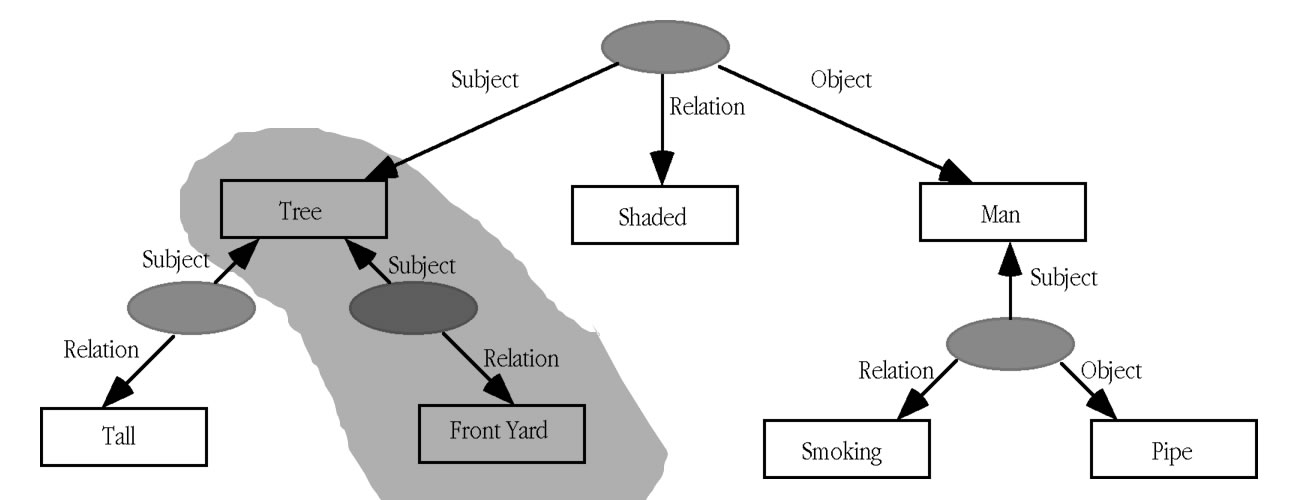
And only one of the four propositional components of the network are matched by the sentence “The tree was in the front yard”.
Compare this with the task of judging the second recognition sentence
(“The tree in the front yard shaded the man”):
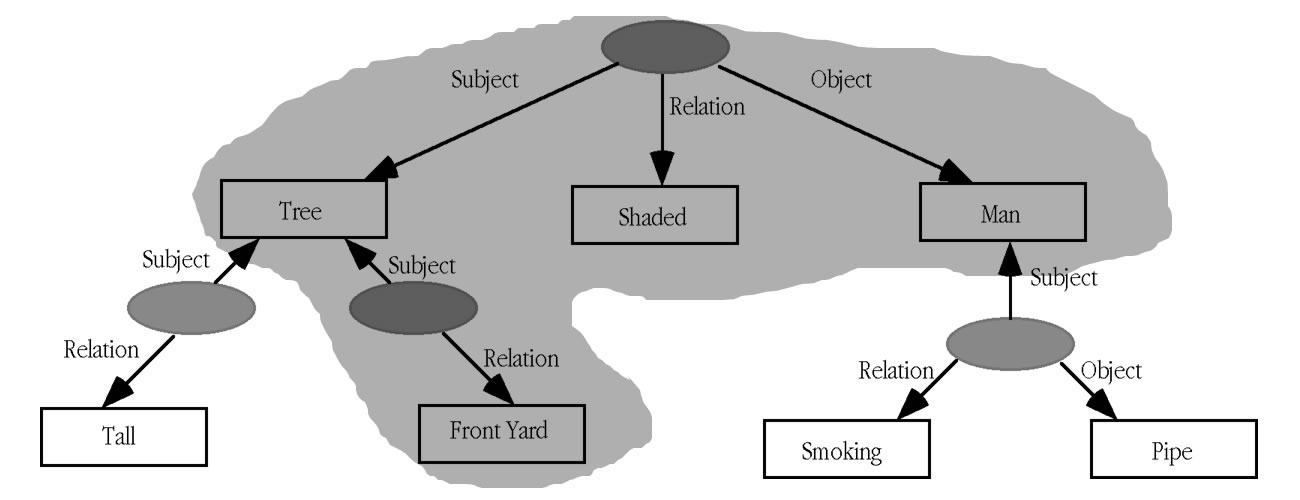
For this sentence, 2 out of the 4 propositional components are matched
by this sentence. Now lets look at each of the other recognition sentences.
“The tall tree shaded the man who was smoking a pipe”
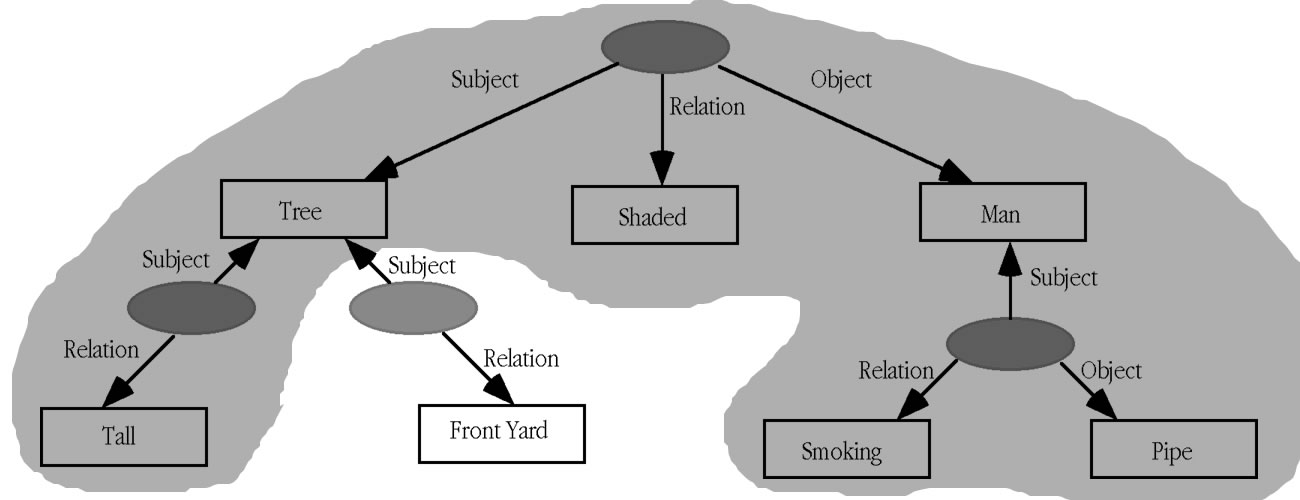
“The tall tree shaded the man”
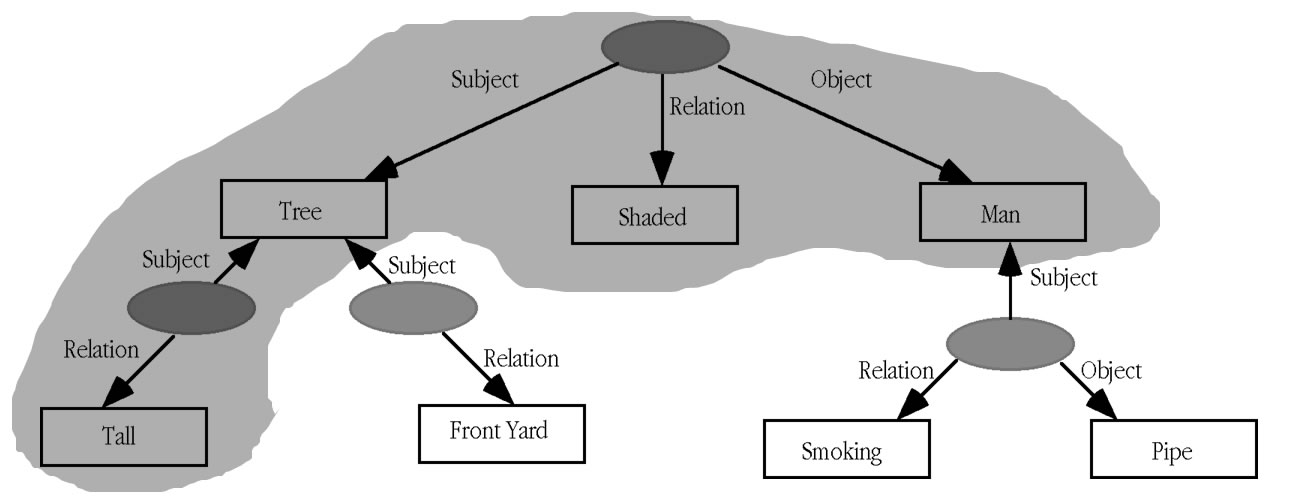
“The tree shaded the man”
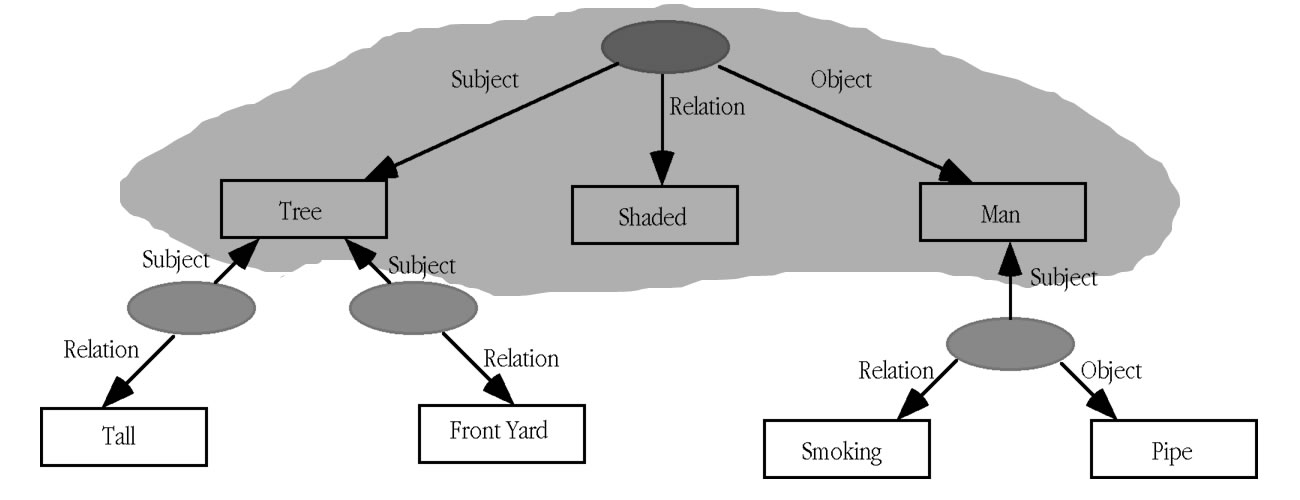
Under this model, because recognition sentence #3 is most similar to the whole propositional network, it is most likely to be judged as “old”. Likewise, this model predicts the data observed by Bransford & Franks (1971). That is [#3] > [#2 and #4] > [#1 and #5].
Surprisingly enough, this model predicts that it doesn’t matter whether the recognition sentence is actually new or old for subjects’ ratings. The only criteria that matters is how similar the sentence is to the resulting propositional network. Bransford & Franks showed just this. For example, “The tree in the front yard shaded the man who was smoking a pipe” (OLD) is just as likely to be judged OLD as “The tall tree shaded the man who was smoking a pipe” (NEW) because they both contain 3 out of the 4 propositional components in the resulting propositional network.